Updated October 2026 · By Jere Construction Roofing · 7 min read
When a flat roof needs replacing, most property owners in Massachusetts end up choosing between three single-ply membranes: EPDM, TPO, and PVC (Duralast is a well-known PVC system). All three are proven, all three can last 20 years or more, and all three are installed on homes and commercial buildings across Greater Boston every day.
So which one is right for your roof? This guide compares them side by side, explains where each one shines, and helps you decide based on your building, your budget, and the way New England weather treats flat roofs.
| Feature | EPDM | TPO | PVC / Duralast |
|---|---|---|---|
| What it is | Synthetic rubber membrane | Thermoplastic polyolefin | Reinforced polyvinyl chloride |
| Typical color | Black (white available) | White | White or light gray |
| Seams | Taped or glued | Heat-welded | Heat-welded |
| Typical lifespan | 20 – 30 years | 20 – 25 years | 20+ years |
| Relative cost | $ (lowest) | $$ | $$$ (highest) |
| Cold-weather flexibility | Excellent | Good | Good |
| Energy efficiency | Lower (black absorbs heat) | High (reflective) | High (reflective) |
| Ponding water / chemicals | Good | Good | Excellent |
| Ease of repair | Very easy | Easy (when clean) | Easy (when clean) |
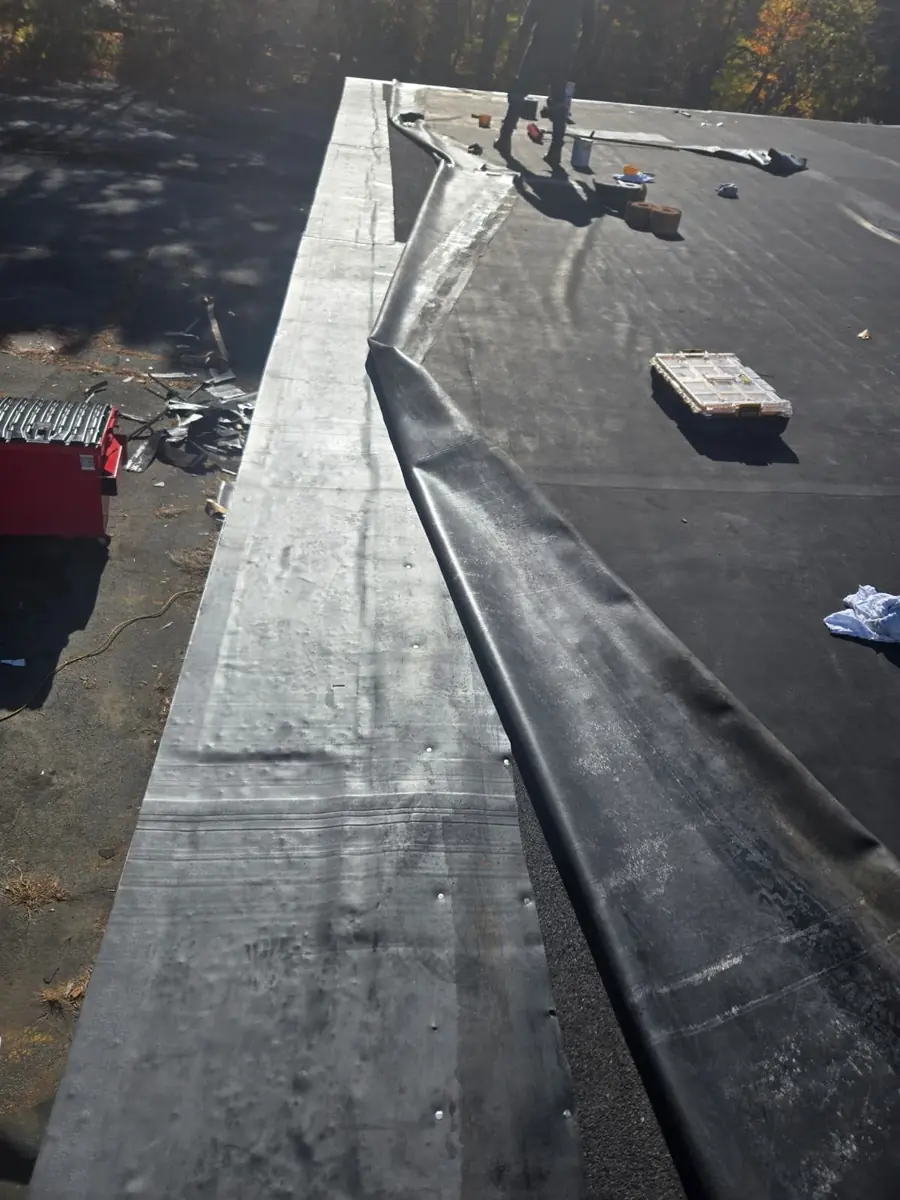
EPDM (ethylene propylene diene monomer) is a synthetic rubber membrane that has been used on flat roofs for decades. It comes in large sheets, which means fewer seams, and it is either fully adhered with adhesive, mechanically fastened, or ballasted.
EPDM is a great fit for triple-deckers, additions, garages, porches, and most residential flat roofs where budget and durability matter most. Learn more on our EPDM roofing page.
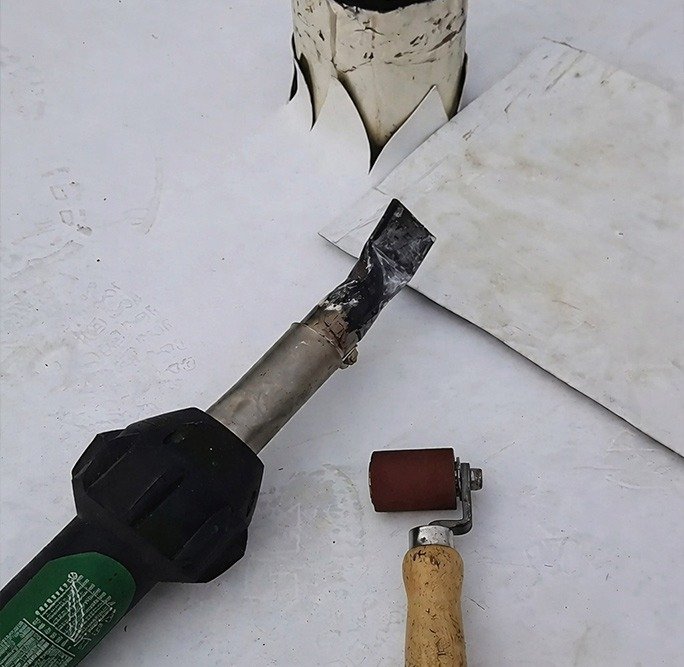
TPO (thermoplastic polyolefin) is a single-ply membrane with a bright white surface. Its seams are joined with hot air, which melts the membrane together into a single watertight piece. TPO has become one of the most popular flat roofing materials in the country.
TPO is an excellent choice for buildings where summer heat is a problem, such as top-floor apartments, homes with rooftop air conditioning, and commercial buildings. See our TPO roofing page for details.
PVC (polyvinyl chloride) roofing is a reinforced thermoplastic membrane with heat-welded seams, similar to TPO in appearance but with a different chemistry. Duralast is a well-known PVC roofing system that is custom-fabricated to fit each roof, so large panels arrive ready to install with fewer seams to weld on site.
PVC is ideal for commercial roofs, restaurants (grease exhaust), roofs with lots of equipment, and roofs that have struggled with ponding water. Learn more on our Duralast roofing page.
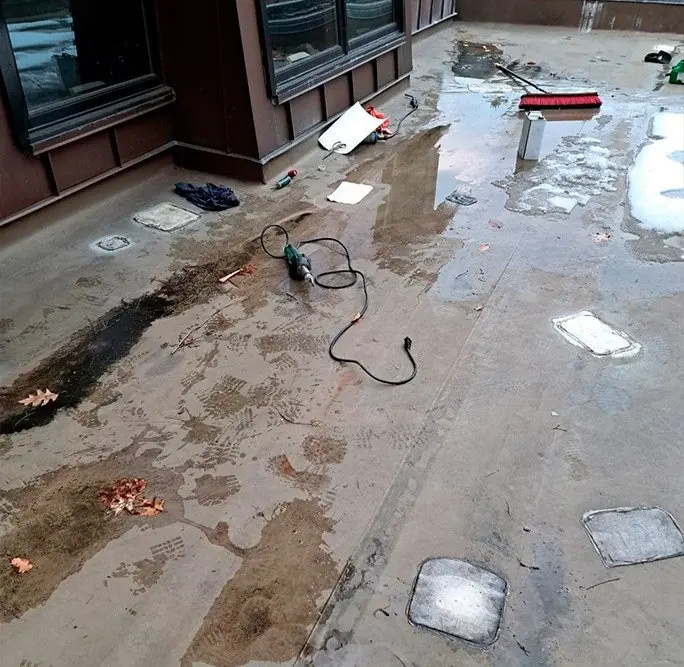
Flat roofs in New England face a tough mix: heavy snow loads, ice that forms at edges and drains, freeze-thaw cycles in spring and fall, nor’easter wind, and hot summer sun. Here is how each membrane holds up:
Here is the truth most roofers will agree on: a well-installed EPDM roof will outperform a poorly installed PVC roof every time. Most flat roof failures happen at seams, edges, drains, and flashing around penetrations, not in the middle of the membrane. When you compare contractors, ask how they handle:
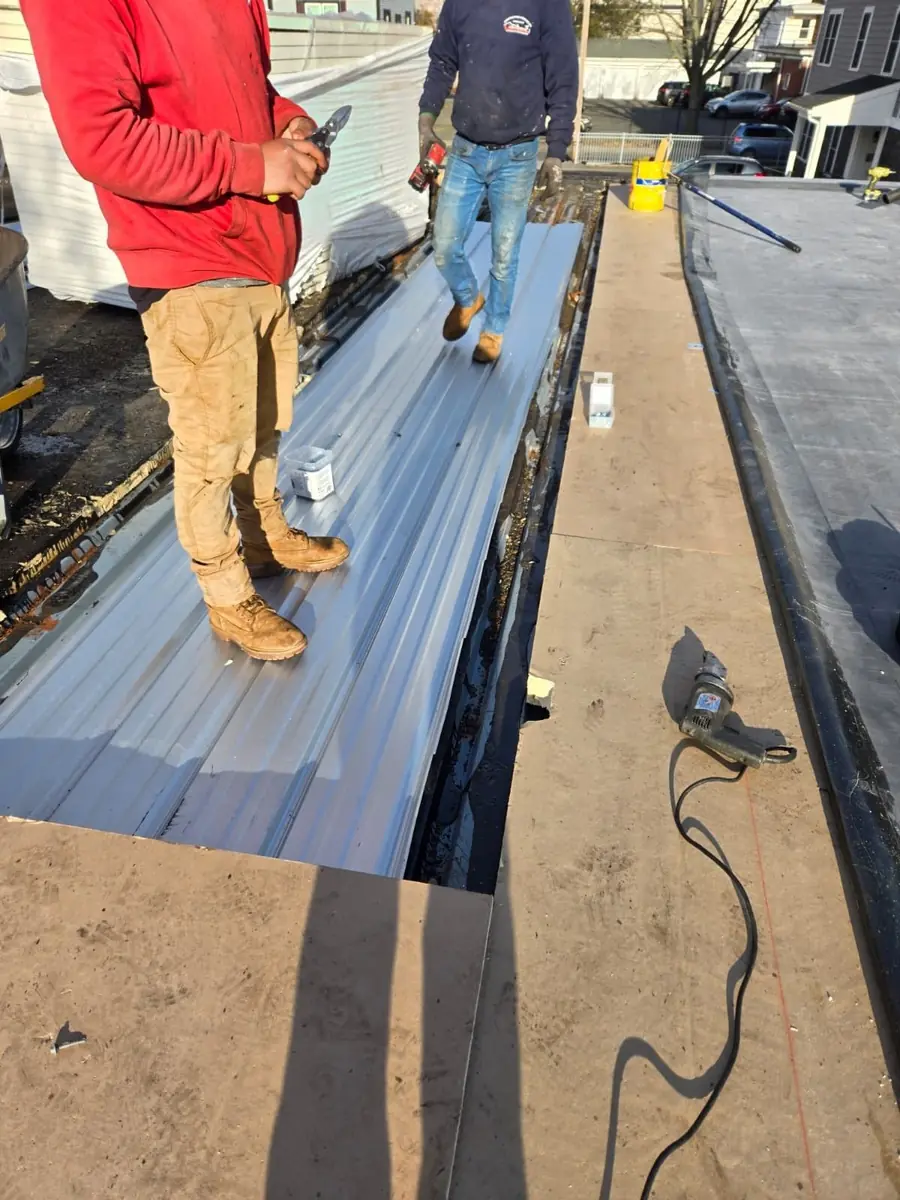
No matter which membrane you choose, a little routine care adds years to a flat roof. Most problems we see on Massachusetts flat roofs are not caused by the membrane wearing out. They are caused by water that sits too long, debris that clogs drains, and small seam or flashing issues that go unnoticed.
Comparing quotes only by upfront price can be misleading. A more useful way to compare is cost per year of expected service life. For example, a slightly more expensive roof that lasts several years longer, needs fewer repairs, or lowers summer cooling costs may cost less over time than the cheapest option. Ask each contractor what lifespan to expect from the system they propose, what warranty comes with it, and what maintenance it will need. Then compare the full picture, not just the bottom line on the estimate.
Use these quick scenarios as a starting point:
| Your situation | Usually the best fit |
|---|---|
| Residential triple-decker or addition on a budget | EPDM |
| Hot top-floor apartment or rooftop AC units | TPO |
| Commercial building, restaurant, or many penetrations | PVC / Duralast |
| Persistent ponding water | PVC / Duralast (plus drainage fixes) |
| Roof deck or heavy foot traffic | Discuss a walkable surface or protection layer |
The best way to decide is an inspection. Jere Construction Roofing installs and repairs EPDM, TPO, and Duralast roofs across Lynn and Greater Boston, and we will explain the options for your specific roof with a free estimate. Curious about pricing? Read how much a flat roof costs in Massachusetts.
Neither is better for every roof. EPDM is more affordable and very flexible in cold weather. TPO costs a bit more but has a reflective white surface and heat-welded seams. The right choice depends on your building, budget, and how much summer heat matters.
Yes. Duralast is a reinforced PVC roofing system that is custom-fabricated to fit each roof, which reduces the number of seams installed on site.
EPDM commonly lasts 20 to 30 years, and TPO and PVC typically last 20 years or more. Installation quality and maintenance affect lifespan more than the material itself.
A white TPO or PVC roof can reduce summer cooling costs, especially for top-floor units. In winter the difference is smaller, so the benefit depends on how much heat the building gains in summer.
Sometimes. If there is only one existing layer and the deck and insulation are dry, a recover may be possible. Wet insulation or multiple layers usually need to be removed first.
Jere Construction Roofing is a licensed and insured contractor based at 6 Belle Avenue in Lynn, MA, serving the North Shore and Greater Boston. Call (781) 888-7440 or request a free estimate.