Updated October 2026 · By Jere Construction Roofing · 7 min read
Most homeowners do not think about their roof until water drips onto the kitchen floor. By then, the damage is often bigger than it needed to be: wet insulation, stained ceilings, rotted decking, and sometimes mold. The good news is that roofs almost always give warning signs long before they fail.
This guide walks through the 12 most common signs that your roof needs attention, what each one usually means, and how to decide between a repair and a full replacement. It is written for homes in Massachusetts, where snow, ice dams, nor’easters, and freeze-thaw cycles put roofs through more stress than in many other parts of the country.
Safety first: you can check most of these signs from the ground with binoculars, from inside your attic, or by looking at your gutters. Please do not climb onto your roof, especially when it is wet, icy, or steep.
Age is the simplest warning sign. Most asphalt shingle roofs last about 20 to 30 years, depending on the shingle quality, ventilation, and exposure. If your roof is in that range, or you do not know how old it is, it is worth having it inspected even if you do not see any problems yet.
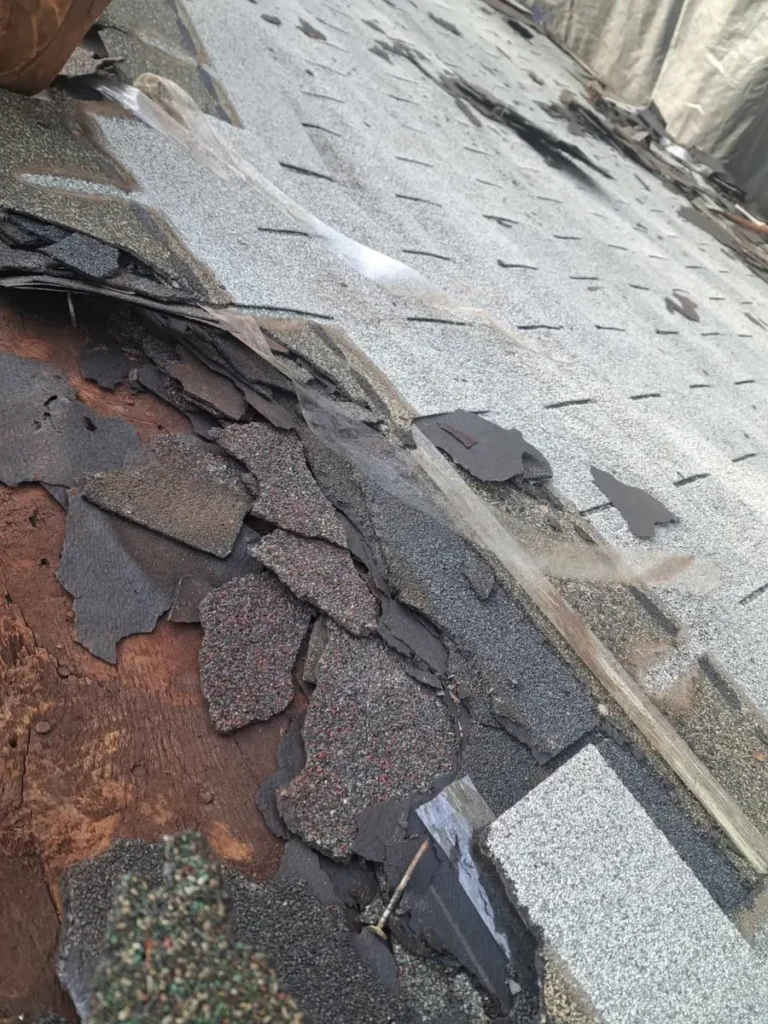
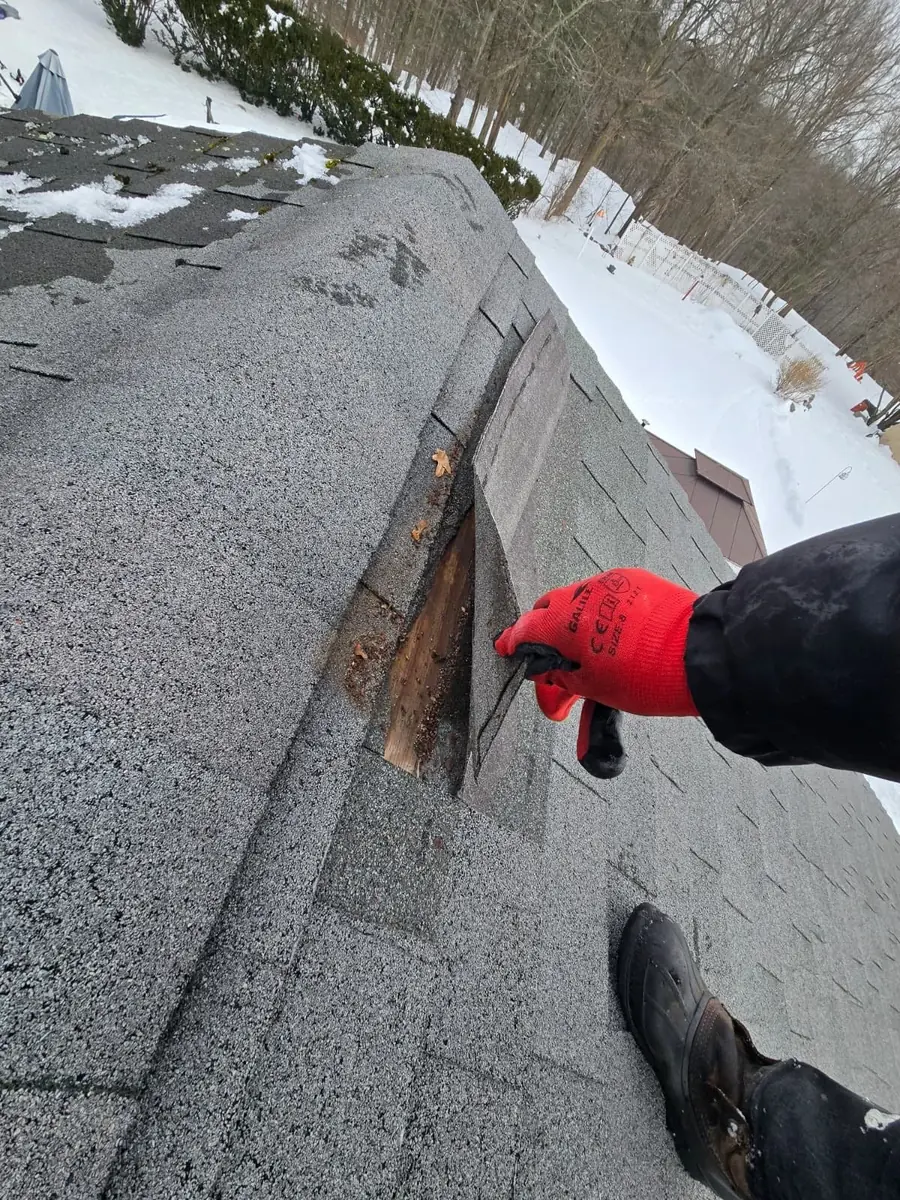
Shingles should lie flat. When the edges curl up or the middle cups down, the shingles are drying out and losing their ability to shed water. Wind can then get underneath and lift them. Curling is often a sign of age, poor attic ventilation, or both.
A few missing shingles after a storm can usually be repaired. But if shingles keep blowing off, or many are cracked, the sealant strips and the shingles themselves may be failing across the whole roof.
Asphalt shingles are covered with small mineral granules that protect them from the sun. As shingles age, the granules wash off and collect in gutters and at the bottom of downspouts. A handful after a new roof is normal; large amounts on an older roof mean the shingles are wearing out.
Areas where the granules are gone look darker or smooth. These spots age faster and are more likely to crack and leak.
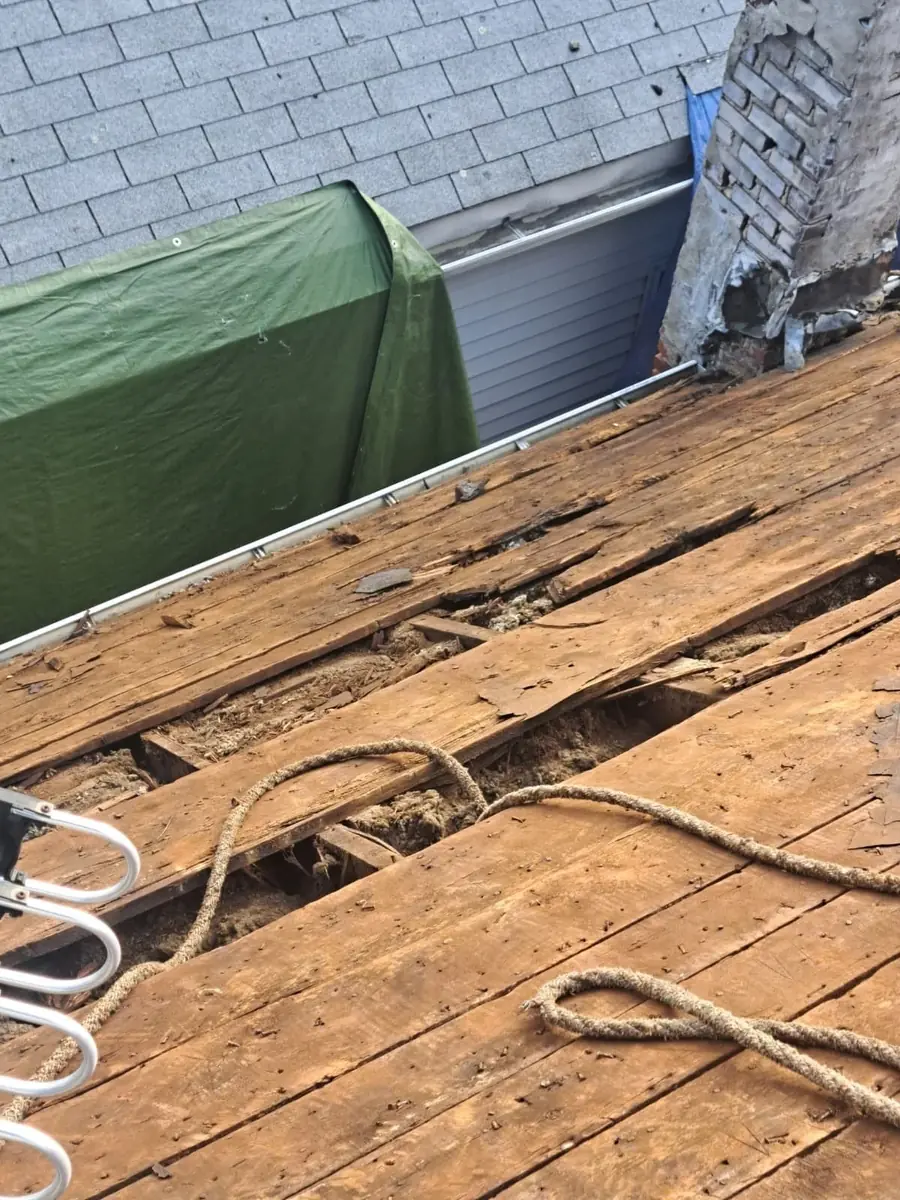
A roof should look straight along the ridge and edges. A dip or sag can point to water-damaged decking, failing rafters, or too much weight from multiple layers of old shingles. Sagging is a structural concern and should be inspected promptly.
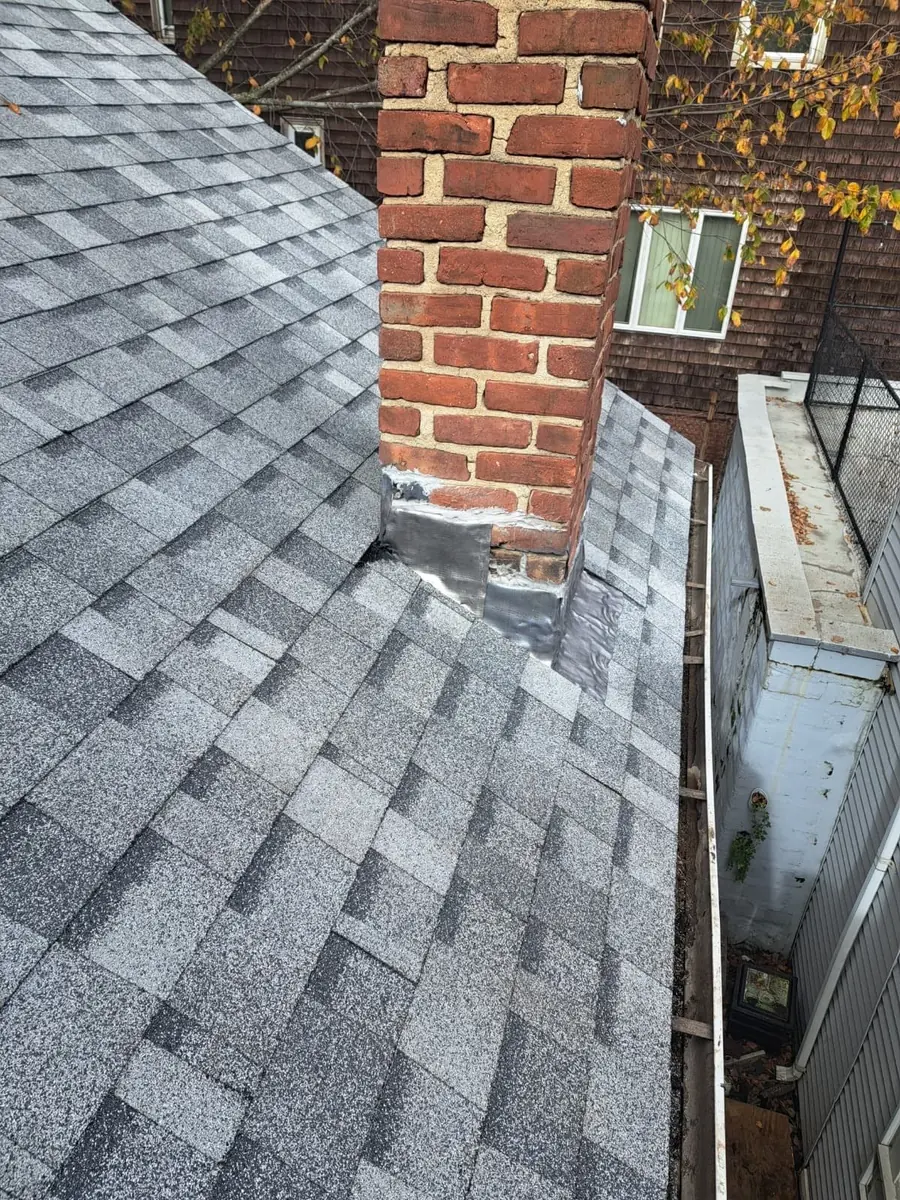
Flashing is the metal that seals the joints where the roof meets chimneys, skylights, vent pipes, and walls. It is one of the most common sources of leaks. Look for rusted, bent, or loose flashing, and gaps in the sealant. On many older Massachusetts homes, chimney flashing is the first thing to fail.
Dark streaks are usually algae, which is mostly a cosmetic issue. Moss is different: it holds moisture against the shingles and can lift them, especially on shaded north-facing slopes and under trees. Heavy moss growth is worth addressing.
Brown or yellow stains on top-floor ceilings, or peeling paint near the ceiling line, often mean water is getting in. Stains near exterior walls in winter can also point to ice dams. Do not just paint over them: find the source first.
On a sunny day, go into your attic with the lights off. If you can see daylight through the roof boards, water can get in too. Also look for wet or darkened wood, damp insulation, or a musty smell.
Wet insulation and poor ventilation make your heating and cooling system work harder. If your bills are climbing without explanation, an attic and roof inspection may find the reason.
Ice dams form when heat escapes into the attic, melts snow on the roof, and the water refreezes at the cold eaves. If you get ice dams every winter, your roof and attic likely need better insulation, ventilation, and ice and water shield along the eaves. Read our full guide on how to prevent ice dams.
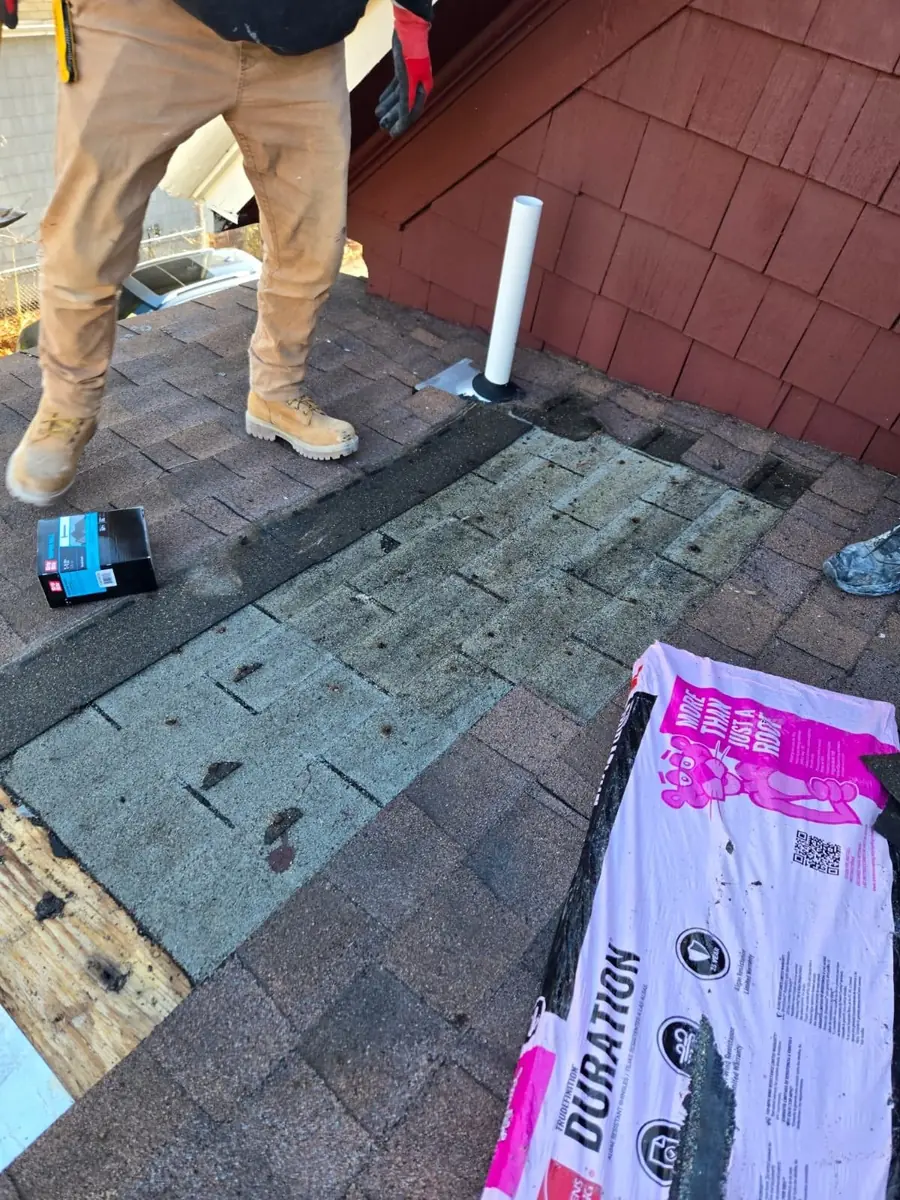
Seeing one of these signs does not automatically mean you need a new roof. Here is a simple way to think about it:
| Situation | Usually means |
|---|---|
| Roof under 15 years old, damage in one area | Repair |
| A few missing shingles after a storm | Repair |
| Leak at chimney or vent flashing only | Flashing repair |
| Widespread curling, cracking, or granule loss | Replacement |
| Multiple leaks in different places | Replacement |
| Roof 20+ years old with visible wear | Replacement (plan ahead) |
| Sagging roof deck | Inspection and structural repair |
If you are repairing the same roof every year, a replacement is often the better investment. And in Massachusetts, building code generally limits how many layers of shingles a roof can have, so a roof that already has two layers will need a full tear-off.
Small roof problems rarely stay small. A leak that starts at a single shingle can soak the roof deck, ruin insulation, stain ceilings, damage drywall, and encourage mold. Repairs that might have cost a few hundred dollars can turn into thousands. Winter makes things worse, because ice and snow find every weak point.
Catching problems early is the best way to avoid an emergency replacement. Here is a simple routine you can follow from the ground and the attic.
Nor’easters, summer thunderstorms, and high winds are the most common causes of sudden roof damage in Massachusetts. After a major storm:
Prompt action matters. Even a small opening lets water into the decking and insulation, and repeated storms make the damage worse.
A professional inspection should cover:
Jere Construction Roofing provides free roof inspections and estimates for homeowners in Lynn and across Greater Boston, including Wakefield, Stoneham, Melrose, and Lynnfield. We install and repair asphalt shingle roofs, flat roofs, gutters, and chimneys, and we will give you an honest repair-or-replace recommendation.
Common signs include a roof older than 20 years, curling or cracked shingles, lots of granules in the gutters, multiple leaks, sagging, and daylight visible in the attic. A professional inspection can confirm whether a repair or replacement makes sense.
Most asphalt shingle roofs last about 20 to 30 years, depending on shingle quality, attic ventilation, and exposure to wind, snow, and sun.
Building code generally limits roofs to two layers of shingles. Even when an overlay is allowed, a full tear-off lets the roofer inspect and repair the decking, which usually gives a longer-lasting result.
Usually they indicate water from a roof leak, flashing problem, or ice dam, but condensation from poor attic ventilation can also cause stains. An inspection will find the source.
Jere Construction Roofing offers free, no-obligation roof inspections and estimates for homes in Lynn and Greater Boston.
Jere Construction Roofing is a licensed and insured contractor based at 6 Belle Avenue in Lynn, MA, serving the North Shore and Greater Boston. Call (781) 888-7440 or request a free estimate.