Updated October 2026 · By Jere Construction Roofing · 8 min read
If you own a triple-decker in Lynn, a row house in Boston, or a commercial building anywhere on the North Shore, there is a good chance part of your roof is flat. Flat and low-slope roofs are everywhere in Massachusetts, and sooner or later every one of them needs repair or replacement. The first question most owners ask is simple: how much is this going to cost?
The honest answer is that it depends on your roof. But “it depends” is not very helpful when you are trying to plan a budget, so this guide breaks down typical price ranges for the most common flat roof systems in the Greater Boston area, explains the factors that move the price up or down, and shows you how to get an accurate number for your property.
The ranges in this article are general market estimates for the Greater Boston area to help you plan. They are not a quote. Every roof is different, and the only way to know your actual cost is an on-site inspection.
Flat roofing is usually priced per square foot of roof area, installed. For a full replacement in the Greater Boston market, typical ranges look like this:
| Roof system | Typical installed cost (per sq ft) | Expected lifespan |
|---|---|---|
| EPDM rubber | $6 – $12 | 20 – 30 years |
| TPO | $7 – $13 | 20 – 25 years |
| PVC (including Duralast) | $9 – $15 | 20+ years |
| Modified bitumen | $5 – $10 | 15 – 20 years |
| Flat roof repair (small area) | $300 – $1,500+ per repair | Depends on roof condition |
For a typical 1,000 square foot flat roof on a Massachusetts multi-family home, that often puts a full replacement somewhere in the high four figures to the mid five figures, depending on the system and the condition of what is underneath. Smaller roofs over porches, additions, or garages can cost much less.
Two roofs with the same square footage can have very different prices. These are the factors that matter most.
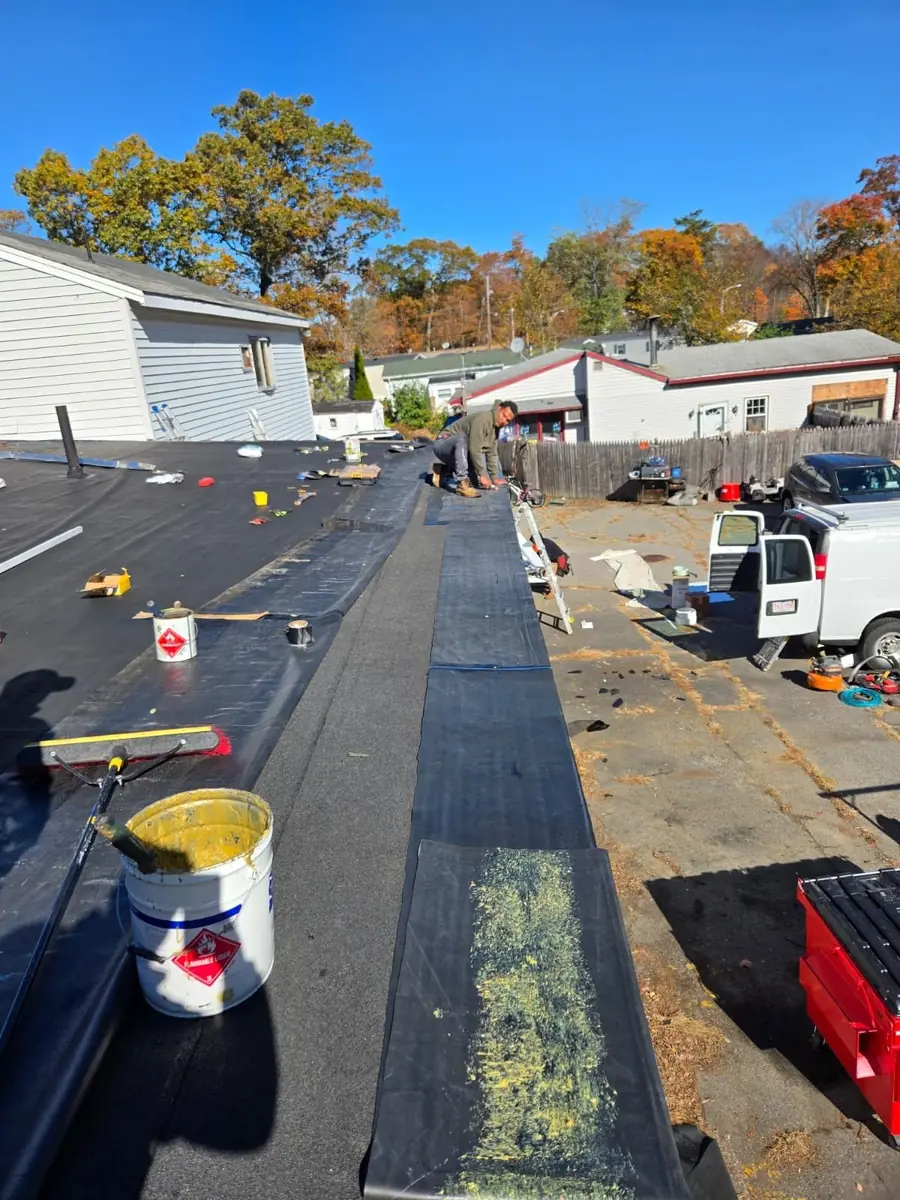
The membrane you choose is the biggest single factor. EPDM rubber roofing is usually the most affordable single-ply option and has a long track record in cold climates. TPO costs a little more but offers a reflective white surface and heat-welded seams. Duralast and other PVC systems are typically the most expensive, but they are custom-fabricated with fewer field seams and excellent resistance to ponding water and chemicals.
If your old roof has to be removed, labor and disposal add to the cost. Roofs with multiple old layers, or layers that are wet, take longer to strip. In some cases, if there is only one existing layer and the deck and insulation are completely dry, a roof can be “recovered” without a full tear-off, which saves money. A proper inspection is the only way to know which option is safe.
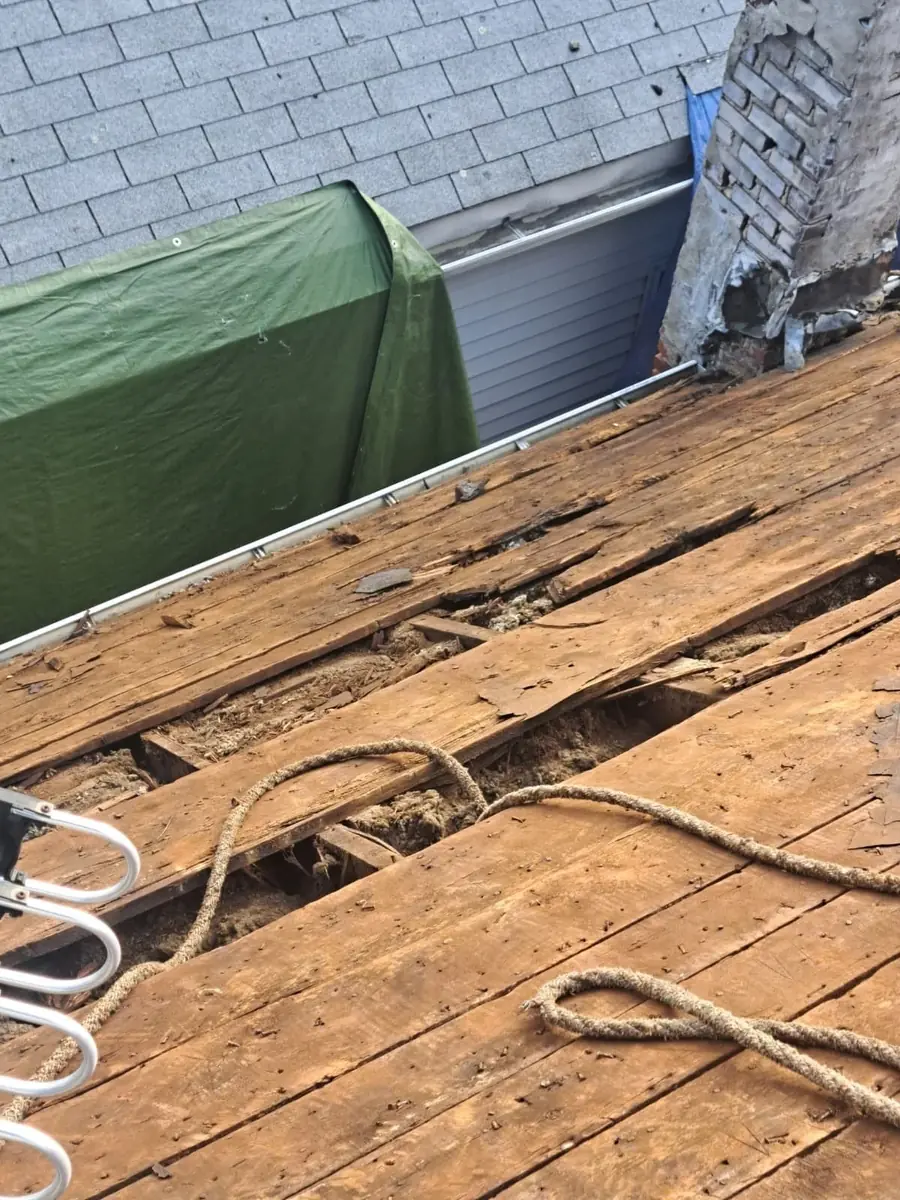
Years of slow leaks often rot the wood decking under a flat roof. Damaged boards must be replaced before a new membrane goes down, because a new roof over rotten wood will fail. Deck repairs are usually priced per sheet or per square foot once the old roof is opened up.
Many older Massachusetts flat roofs have little or no insulation. Adding rigid insulation board during a replacement increases the upfront cost, but it can make top-floor units noticeably more comfortable and reduce heating and cooling bills. Wet insulation found during tear-off must always be replaced.
Drains, scuppers, skylights, chimneys, vent pipes, rooftop HVAC units, parapet walls, and roof decks all require custom flashing work. A simple open rectangle is the cheapest roof to install; a roof with many penetrations and edges takes more time and material. If your roof has ponding water, tapered insulation or extra drains may be needed to fix the slope.
Dense neighborhoods in Boston, Malden, Everett, and Lynn often mean tight lots, shared walls, and limited space for dumpsters. Three-story buildings need more equipment and safety setup. These logistics affect labor time and therefore price.
In Massachusetts, roof replacement generally requires a building permit from your city or town, and the work must meet the state building code. Permit fees vary by community. Make sure your contractor pulls the permit, and confirm they hold the appropriate Massachusetts licensing and registration for residential work.
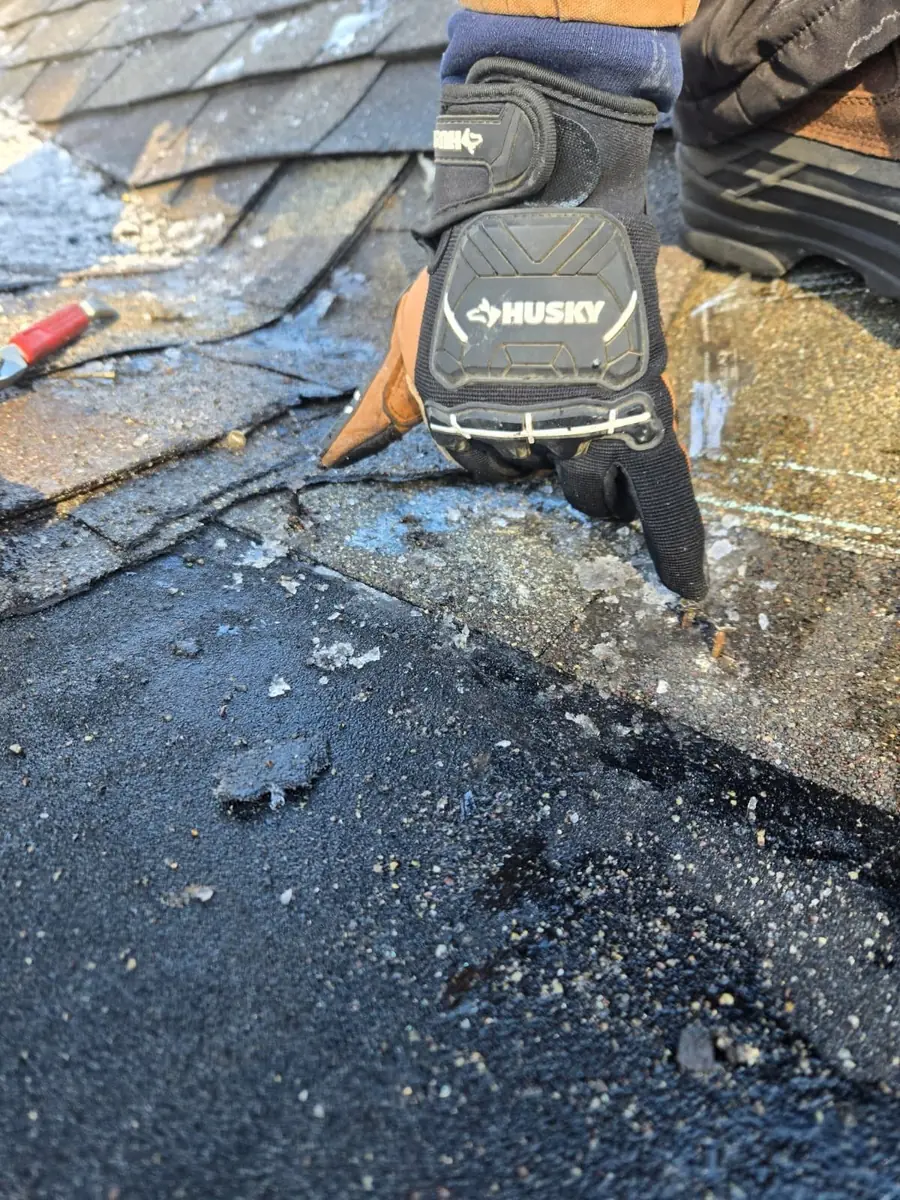
Not every leak means you need a new roof. A good contractor should tell you honestly which option makes sense. In general:
Patching a roof that is at the end of its life often turns into paying for several repairs and then a replacement anyway. On the other hand, replacing a roof that only needed a seam repair is money wasted. That is why an inspection comes first.
The cheapest roof upfront is not always the cheapest roof over 20 years. When you compare quotes, think about cost per year of service life:
For a detailed comparison, read our guide EPDM vs. TPO vs. PVC: which flat roof is best?
A low quote can hide surprises. Ask every contractor these questions so you can compare estimates fairly:
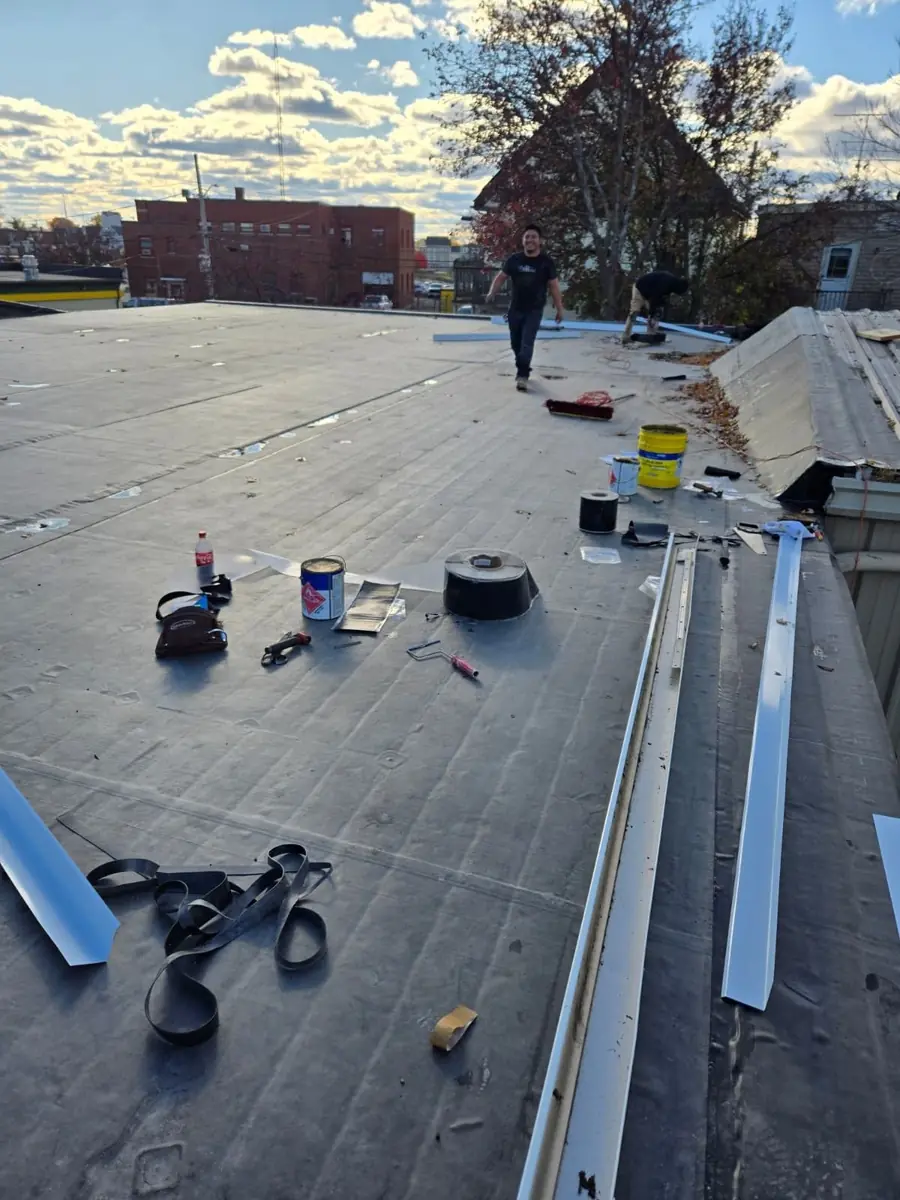
The fastest way to get a real number is an on-site inspection. A contractor should look at the membrane, seams, flashing, drains, and the interior below, check for soft spots or wet insulation, and measure the roof. You should then receive a clear recommendation, repair, recover, or replacement, with a written scope of work.
Jere Construction Roofing installs and repairs flat roofs, EPDM, TPO, and Duralast systems for homes and businesses across Lynn and Greater Boston, including Boston, Malden, Everett, Melrose, and the North Shore. We offer free, no-obligation estimates.
Full flat roof replacement in the Greater Boston area typically ranges from about $6 to $15 per square foot installed, depending on the material (EPDM, TPO, or PVC), tear-off, insulation, decking repairs, and roof details. An on-site inspection is needed for an exact price.
EPDM is usually slightly less expensive than TPO for a comparable roof. TPO offers a reflective white surface that can reduce cooling costs, so the better value depends on your building.
With proper installation and maintenance, most flat roofs last 15 to 30 years. EPDM commonly lasts 20 to 30 years, while TPO and PVC typically last 20 years or more.
Yes, if the damage is limited and the insulation is dry. Punctures, failed seams, and worn flashing can often be repaired. Widespread blistering, repeated leaks, or wet insulation usually mean replacement.
Roof replacement generally requires a building permit from your local building department in Massachusetts. Your roofing contractor should pull the permit and follow the state building code.
Jere Construction Roofing is a licensed and insured contractor based at 6 Belle Avenue in Lynn, MA, serving the North Shore and Greater Boston. Call (781) 888-7440 or request a free estimate.