Updated October 2026 · By Jere Construction Roofing · 7 min read
Every winter, homeowners across Massachusetts look up and see the same thing: thick ridges of ice along the edge of the roof and long icicles hanging from the gutters. Those are ice dams, and they are more than a winter nuisance. Ice dams can force water under shingles and into walls, ceilings, and insulation, causing damage that often is not discovered until spring.
This guide explains what causes ice dams, the damage they do, what you can safely do when you have one, and the permanent fixes that stop them from forming in the first place.
An ice dam is a ridge of ice that forms at the lower edge of a roof, usually right above the gutters. As snow on the upper roof melts, the water runs down until it reaches the cold edge, where it freezes. Over days and weeks, the ice builds up into a dam. Meltwater then pools behind it, and because shingles are designed to shed water, not hold it, that water can back up under the shingles and leak into the house.
Ice dams need three things at the same time:
In other words, ice dams are mostly a heat problem, not a gutter problem. Warm air leaking into the attic through gaps around light fixtures, attic hatches, bathroom fans, chimneys, and plumbing is the most common culprit. Not enough insulation and poor attic ventilation make it worse. Many older Massachusetts homes, including capes, colonials, and Victorians, have exactly these conditions.
If ice dams have already formed, focus on safety and on limiting damage:
These steps manage the problem for this winter. To stop ice dams from coming back, you need to fix the cause: heat loss into the attic and an unprotected roof edge.
The most effective step is stopping warm air from getting into the attic. Gaps around recessed lights, ceiling fixtures, attic access hatches, plumbing and wiring holes, chimneys, and bathroom fan housings should be sealed with the right materials. Air sealing is often inexpensive compared with the damage it prevents.
Once the air leaks are sealed, adding insulation to the attic floor keeps heat in the living space where it belongs. Many older homes have far less insulation than modern standards recommend. Better insulation also lowers heating bills.
A well-ventilated attic stays close to the outdoor temperature in winter, which keeps the roof deck cold and the snow from melting unevenly. Balanced ventilation usually means intake vents at the soffits and exhaust vents at or near the ridge. Insulation must not block the soffit vents.
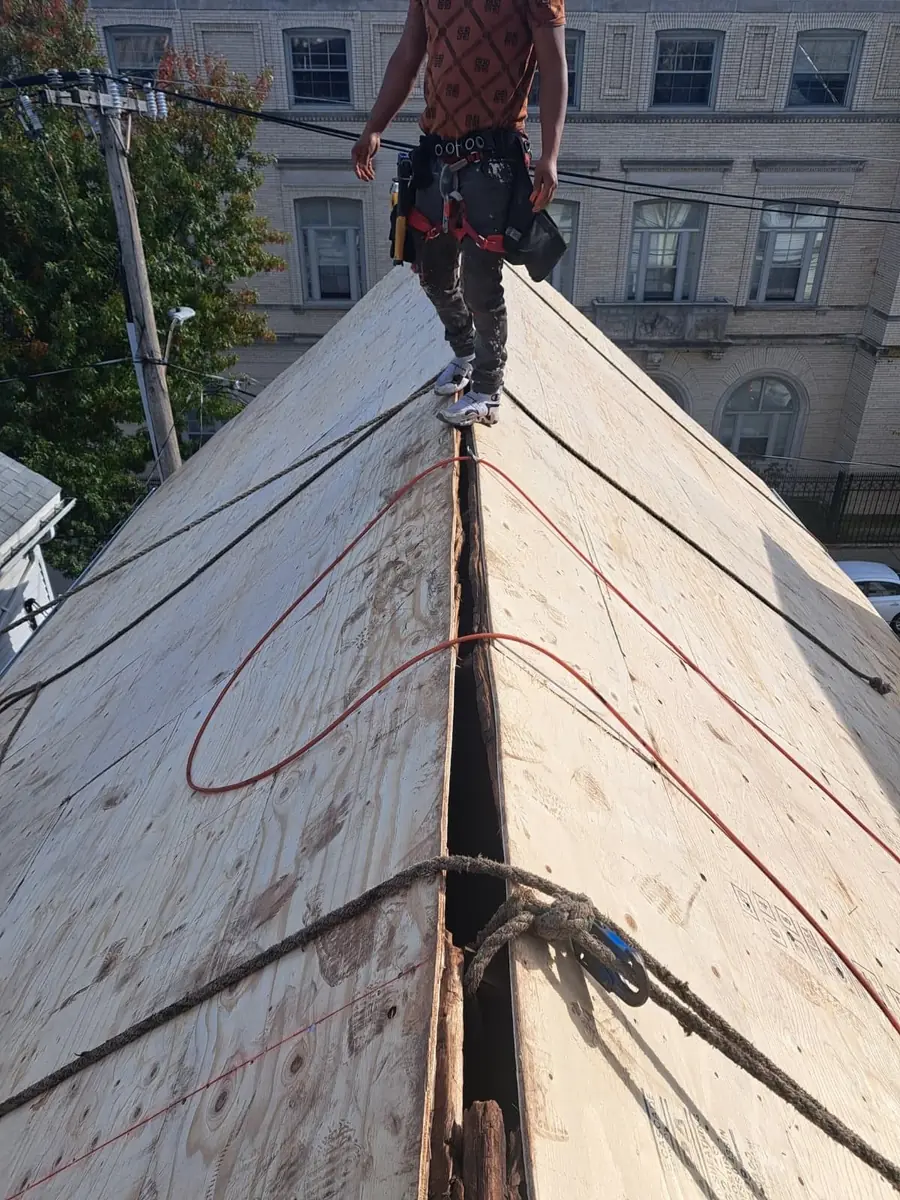
Ice and water shield is a self-adhering waterproof membrane installed under the shingles along the eaves, in valleys, and around penetrations. It seals around nails and keeps water out even if an ice dam backs water up under the shingles. In cold climates like Massachusetts, building code requires an ice barrier along the eaves on new roofs. If your roof was installed without it, the next re-roof is the time to add it.
Gutters do not cause ice dams, but clogged or sagging gutters make ice buildup and damage worse. Clean gutters in the fall, make sure they are firmly attached, and check that downspouts carry water away from the foundation. See our gutter installation and repair services.
Electric heat cables installed in a zigzag along the roof edge can create channels for meltwater to drain in trouble spots. They do not fix the underlying cause and they use electricity, so they are best as a supplement for specific areas rather than a whole-house solution.
| Step | What it fixes | When to do it |
|---|---|---|
| Air-seal the attic floor | Stops warm air reaching the roof | Any time; best before winter |
| Add attic insulation | Keeps heat in the living space | Any time; best before winter |
| Balance attic ventilation | Keeps the roof deck cold | During re-roof or as a project |
| Ice and water shield at eaves | Blocks leaks if ice forms | During roof replacement |
| Clean and secure gutters | Reduces ice buildup and damage | Every fall |
| Roof rake after heavy snow | Removes the meltwater source | During winter storms |
Many homeowners policies cover sudden interior water damage caused by ice dams, but coverage varies and often excludes the cost of fixing the roof itself or damage from long-term neglect. Check your policy and document damage with photos. Fixing the causes also helps prevent repeat claims.
Ice dams are usually associated with pitched shingle roofs, but flat and low-slope roofs have their own winter problems. Snow and ice can block drains and scuppers, leaving meltwater nowhere to go. That water can then find its way under flashing or through weak seams. Keeping drains clear before winter, making sure the roof slopes toward its drains, and inspecting seams and flashing in the fall are the best defenses. On many Massachusetts triple-deckers, the edge where a flat roof meets a parapet wall or gutter is a common trouble spot.
If you get ice dams every winter, your roof and attic are telling you something. Jere Construction Roofing inspects roofs, attic ventilation, flashing, and gutters for homeowners in Lynn and across Greater Boston, including Marblehead, North Reading, Billerica, and Framingham. When it is time for a new roof, we install shingle roofs with ice and water shield, proper ventilation, and new flashing. Wondering whether your roof is near the end of its life? Read 12 warning signs you need a new roof.
Ice dams form when heat escaping into the attic melts snow on the upper roof, and the water refreezes at the colder roof edge. Air leaks, low insulation, and poor ventilation are the main causes.
No. Gutters do not cause ice dams, but clogged or loose gutters can make ice buildup and damage worse. The root cause is heat loss into the attic.
Using a roof rake from the ground to remove snow is generally safe. Do not climb onto an icy roof or chip at ice with tools, which can damage shingles and cause injuries. Call a professional for active leaks.
Ice and water shield is a self-adhering waterproof membrane installed under shingles along the eaves, valleys, and penetrations. It seals around nails and prevents leaks if water backs up behind an ice dam.
A new roof with ice and water shield prevents most ice dam leaks, but stopping ice dams from forming also requires air sealing, insulation, and good attic ventilation.
Jere Construction Roofing is a licensed and insured contractor based at 6 Belle Avenue in Lynn, MA, serving the North Shore and Greater Boston. Call (781) 888-7440 or request a free estimate.